
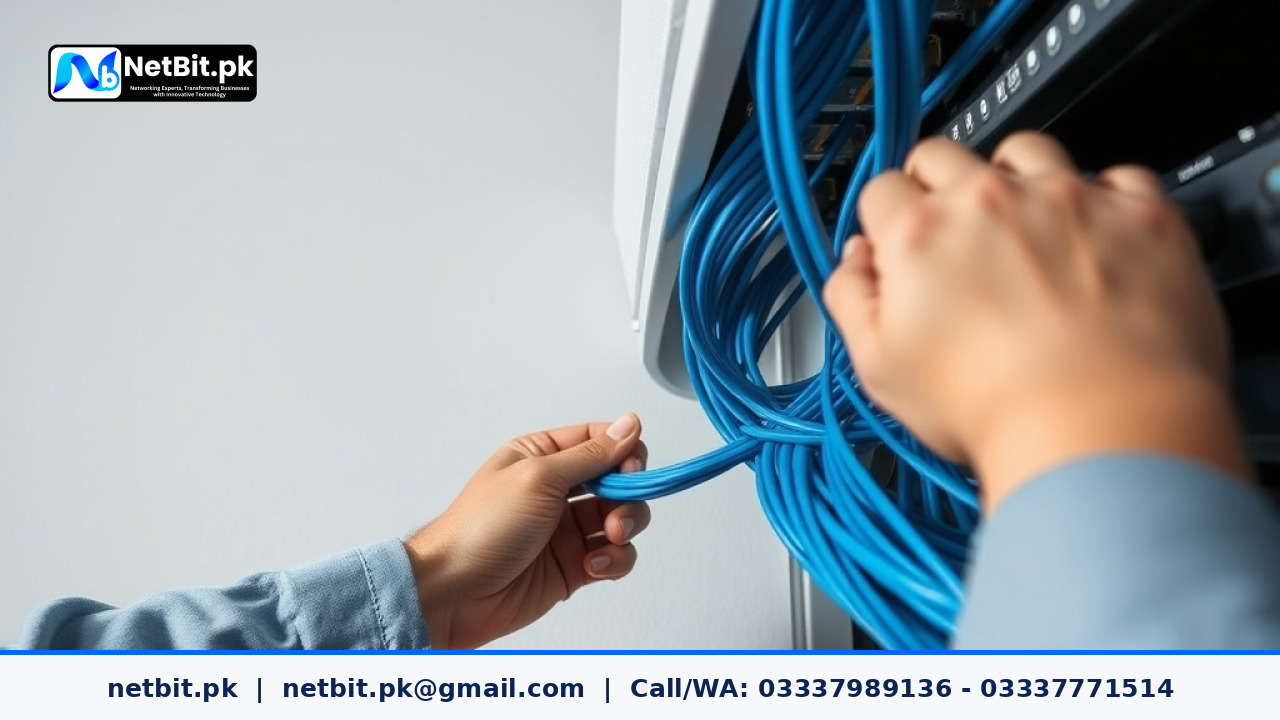
Introduction to Physical Network Cabling Infrastructure
When setting up an office network in Pakistan, modern businesses often focus heavily on high-speed switches, routers, and wireless access points. However, the physical pathways that carry your copper Cat6 cables and fiber patch cords are just as crucial. Poorly managed cables running across floors or hanging loosely from ceilings lead to signal degradation, physical damage, and severe safety hazards. Proper cable ducting and cable tray planning ensure your IT infrastructure remains reliable, easy to troubleshoot, and ready for future business growth.
Whether you are setting up a new commercial premises in Balochistan or upgrading an existing corporate office, organizing your network cabling inside structured channels protects your financial investment. In this practical guide, we break down how Pakistani businesses and IT administrators can plan effective cable routing, choose the right containment systems, and maintain clean standards throughout their premises.
Understanding Cable Containment Systems
Choosing the right physical containment relies on where the cables will travel—across open office ceilings, along perimeter walls, or under raised floors. Utilizing standard, high-grade materials makes future additions straightforward and keeps your workspaces looking professional.
1. PVC Cable Trunking and Ducting
PVC surface trunking is the most common solution for indoor office environments across Pakistan. Available in self-adhesive or screw-mounted formats, PVC channels run along walls and baseboards to conceal Cat6 Ethernet lines. They protect wires from dust, accidental pulling, and surface moisture while providing a neat appearance.
2. Wire Mesh Cable Trays
For ceiling voids and server room overhead paths, open wire mesh trays offer superior ventilation. Modern network switches and power supplies generate ambient heat, and tightly bundled cables inside closed spaces can trap warmth. Wire mesh trays allow heat to dissipate easily while making it simple for technicians to drop down drop-lines into individual cubicles.
3. Galvanized Ladder Trays
In larger facilities or multi-story buildings where heavy bundles of network and main riser fiber patch cords travel between floors, industrial ladder trays provide maximum structural support. They handle significant weight loads without bending or placing strain on the network cables.
Step-by-Step Guide to Planning Office Cable Pathways
Proper planning prevents network interference and physical bottlenecks down the road. Follow these essential steps when designing your ducting layout.
1. Separate Data Cabling from High-Voltage Electrical Lines
One of the most frequent errors in Pakistani office setups is running network cables alongside standard 220V power lines inside the same duct. High-voltage electricity produces electromagnetic interference (EMI), which causes data packet loss, intermittent drops, and reduced network performance. Always maintain a minimum separation of 12 to 18 inches between power cables and unshielded Cat6 data cables, or use double-compartment trunking with an internal metallic partition.
2. Observe Cable Bend Radii and Load Capacity
Copper ethernet lines and fiber optic patch cords have strict minimum bend radius limits. Bending a cable at sharp 90-degree angles can break internal copper strands or fracture delicate fiber cores. Ensure all wall elbows, duct corners, and drop-downs use smooth curved bends. Furthermore, never fill a PVC duct past 40% to 50% of its total volumetric capacity. Overfilling causes compression on the bottom cables, generating friction and restricting airflow.
3. Label and Color-Code Cable Bundles
Before closing PVC covers or pulling wires through ceiling pathways, apply clear labels on both ends of every cable run. Group your network lines logically using hook-and-loop straps (Velcro) rather than tight plastic zip ties, which can crimp the cable jacket. Implementing a standard color code—such as blue for desktop connectivity, yellow for CCTV camera access, and orange for fiber connections—saves countless hours during network troubleshooting.
Common Pitfalls to Avoid in Pakistani Commercial Networks
Local office environments present specific environmental and structural challenges. Avoiding these standard missteps will prolong the lifespan of your networking hardware:
- Using Inferior PVC Trunking: Low-quality local plastic trunking quickly becomes brittle under high temperatures or direct sunlight, cracking open and exposing cables. Invest in flame-retardant, high-impact PVC materials.
- Tension During Installation: Pulling cables with excessive force through narrow ducts damages copper twisting, leading to signal loss. Always use smooth pulling lubricants and standard fish tapes during long runs.
- Neglecting Drip Loops: For cables entering an office from outdoor wireless bridges (such as point-to-point LiteBeam or PowerBeam dish installations), always construct a simple drip loop before the cable enters the wall duct. This prevents rainwater from channeling directly into indoor wall sockets or network switches.
Maintaining and Expanding Your Cable Pathways
An IT network is not static. As your team grows, you will add new workstations, desktop systems, and IP cameras. Design your ducting pathways with extra capacity from day one. Keeping detailed physical schematics of where trunking runs behind drywall or above false ceilings ensures that new network technicians can pull additional lines quickly without disrupting daily office operations.
Frequently Asked Questions (FAQs)
Why shouldn't I run Cat6 cables in the same channel as power wires?
Running high-voltage electricity parallel to network cables induces electromagnetic interference (EMI). This causes severe packet drops, slow file transfers, and potential hardware damage during electrical power surges.
Is PVC ducting suitable for fiber optic patch cords?
Yes, PVC ducting provides excellent physical protection for fiber patch cords. However, ensure that the channel pathways do not contain sharp interior corners, as micro-bends in fiber cables lead to signal loss.
What is the maximum fill ratio for office cable trunking?
The standard recommended fill ratio is 40% for initial installation. This leaves 60% of open space to permit adequate ventilation and allow room for future network upgrades without over-compressing existing cables.
Build a Reliable IT Infrastructure with NetBit Tech
A well-structured physical network is the foundation of every stable business operations center. Loose cables, unorganized server racks, and improper routing lead to unnecessary downtime, safety risks, and expensive emergency maintenance. At NetBit Software House & Technology, our certified networking and systems team designs, builds, and maintains robust IT infrastructure tailored specifically for Pakistani businesses, educational institutions, and commercial spaces.
From complete office Cat6 cabling, fiber patch panel installation, and managed switch configuration to comprehensive CCTV surveillance deployment and custom software systems, NetBit Khuzdar provides end-to-end technology solutions. We combine physical precision with modern network architecture to ensure your business stays connected without interruption.
Ready to upgrade your corporate office network or set up a clean, high-performance IT infrastructure? Contact NetBit Tech today to schedule a site evaluation and consult with our professional networking specialists.



Reader comments.
Share your question, suggestion or experience related to this article.
No comments yet
There are no approved comments on this article yet. You can be the first person to leave one.