
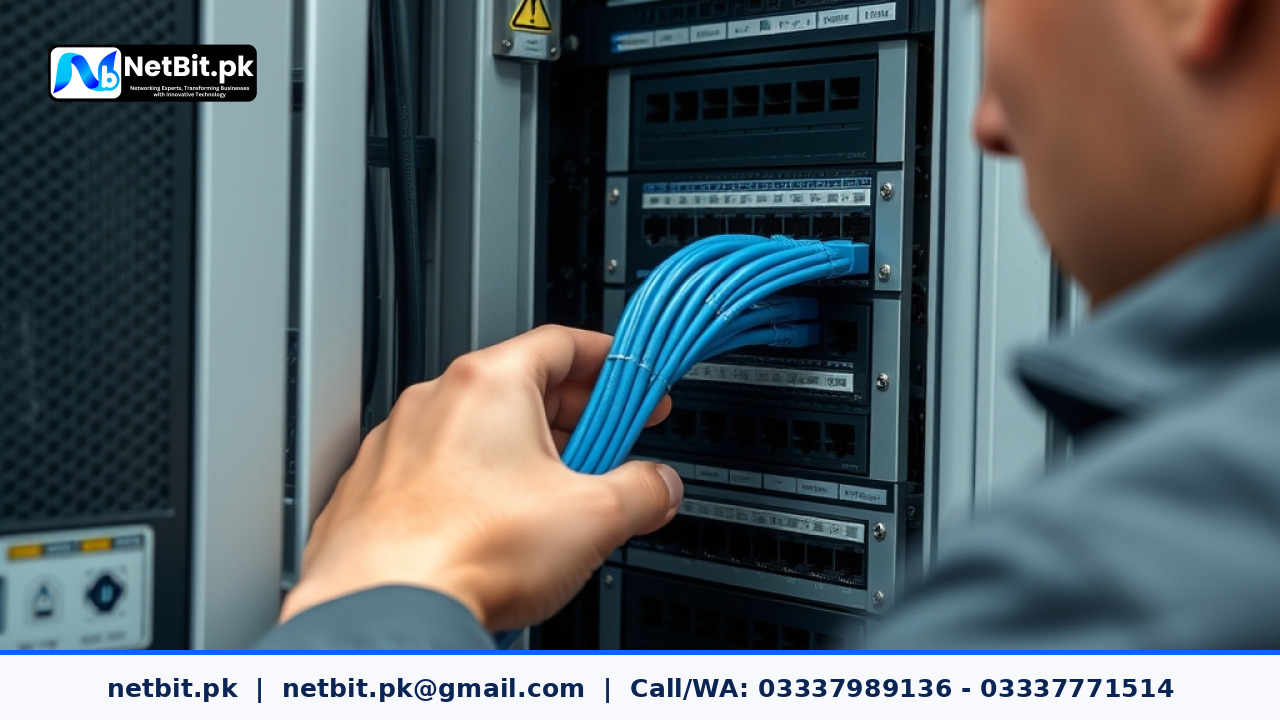
Across Pakistan, commercial enterprises, educational institutions, and regional businesses are undergoing a significant operational shift. Rather than hiring separate vendors for software, network cabling, and security systems, organizations are increasingly consolidating their technology deployment under unified, turn-key project frameworks. This shift is driving measurable efficiency gains and reducing maintenance overhead for growing firms across Balochistan and nationwide.
The Evolution of Multi-Disciplinary Technology Projects in Pakistan
In recent years, managing isolated technology vendors has proven costly and inefficient for local organizations. A typical corporate office or educational campus previously contracted one firm for basic website development, a local technician for running ethernet cables, and an independent installer for security cameras. The lack of coordination between these parties frequently resulted in network bottlenecks, misconfigured bandwidth rules, and delayed project completions.
Today, industry news highlights a clear transition toward integrated technology deployments. Modern facilities require seamless interaction between digital platforms and physical infrastructure. For instance, a custom web-based management portal must operate over a stable, properly terminated network backhaul while feeding live operational data alongside surveillance oversight.
Key Components of Modern Turnkey IT Projects
When executing complex, multi-layered technology projects, engineering teams focus on three primary operational layers:
- Custom Software & Web Platforms: Tailored web applications and desktop management systems designed to handle daily business workflows, client data, and internal resource planning.
- Structured Physical Networking: High-performance LAN foundations built using certified Cat6 copper cables, fiber patch cords, managed network switches, and long-range wireless links such as LiteBeam and PowerBeam devices for multi-building connectivity.
- Integrated CCTV Surveillance: High-definition IP camera networks backed by centralized NVR storage, event-driven recording rules, and secure remote viewing configurations.
How Integrated Deployments Solve Local Operational Challenges
Operating business facilities in regional centers like Khuzdar, Quetta, and surrounding commercial hubs presents distinct challenges, including fluctuating power environments, wide physical layouts, and varying internet availability. Multi-disciplinary projects address these challenges directly through standardized planning and robust execution.
1. Eliminating Bandwidth Congestion on Local Networks
A common failure point in legacy installations is network congestion caused by unmanaged IP camera traffic overlapping with routine business software usage. Integrated project engineering solves this by implementing VLAN tags (Virtual Local Area Networks) and IGMP snooping on network switches. This isolates video feeds from software application traffic, ensuring critical database queries remain fast and responsive.
2. Standardizing Structured Cabling Infrastructure
Improperly run network cabling remains a leading cause of intermittent system downtime. Modern project standards mandate the use of solid copper Cat6 cabling, proper patch panel terminations, and organized cable management trays. When connecting detached campus buildings or multi-story facilities, fiber optic patch cords and point-to-point wireless bridges maintain high data throughput without latency degradation.
3. Streamlining Operational Oversight
Combining customized administrative software with well-planned network hardware allows management teams to monitor operational status across multiple departments from a single interface. Web applications hosted on local application servers operate reliably across high-speed internal networks, minimizing dependency on external cloud connections during regional internet disruptions.
Step-by-Step Execution Framework for Complex IT Projects
For Pakistani organizations preparing to upgrade or construct new facilities, implementing a structured project framework prevents cost overruns and technical misalignments. Professional tech teams follow a rigorous operational roadmap:
- Facility Site Audit & System Mapping: Assessing physical floor plans, measuring cable run lengths, identifying power distribution points, and defining line-of-sight paths for wireless bridges.
- Architecture Design & Bandwidth Budgeting: Designing logical network topologies, assigning IP subnets, calculating storage requirements for surveillance archives, and mapping database schema requirements for custom software.
- Hardware Provisioning & Cable Deployment: Pulling certified Cat6 cabling, terminating patch panels, mounting network switches, configuring Power over Ethernet (PoE) power budgets, and installing camera units.
- Software Deployment & System Testing: Installing local application servers, configuring web server environments, verifying transaction execution speeds, and setting role-based access permissions.
- Final Auditing & Operational Handover: Conducting throughput verification, stress testing concurrent user sessions, training local staff, and delivering detailed documentation.
Frequently Asked Questions About Turnkey Technology Deployments
Why is a unified tech project better than hiring separate vendors?
A single dedicated project team ensures that network switches, cabling bandwidth, security systems, and custom software components are fully compatible. This prevents inter-vendor blame, lowers initial procurement costs, and simplifies ongoing system maintenance.
Can point-to-point wireless bridges connect detached offices reliably?
Yes. Utilizing specialized wireless hardware like LiteBeam and PowerBeam devices enables stable, high-throughput connections across several kilometers with direct line-of-sight, making them ideal for multi-building campuses and industrial sites.
What cable standard should be used for modern office networks?
Certified Cat6 solid copper cabling is the baseline standard for contemporary business networks, supporting gigabit speed transfers over distances up to 100 meters while minimizing cross-talk and signal loss.
Partner with NetBit Tech for Turnkey Engineering Excellence
Executing complex, multi-faceted technology projects demands experienced technical leadership and precise execution. Whether you are constructing a new commercial facility, modernizing a multi-building campus, or deploying integrated software and network infrastructure, NetBit Software House & Technology delivers complete turnkey engineering solutions tailored to local conditions in Khuzdar and across Pakistan.
At NetBit Tech, our multidisciplinary team specializes in end-to-end project execution—from developing secure, high-performance web applications and custom desktop systems to installing robust Cat6 and fiber network backbones, wireless bridges, and CCTV surveillance networks. We eliminate technical friction by managing every hardware and software layer with professional precision.
Ready to upgrade your business infrastructure with a seamless, professionally engineered solution? Consult with the experts at NetBit Khuzdar today to plan, design, and deploy your next major technology project with complete confidence.



Reader comments.
Share your question, suggestion or experience related to this article.
No comments yet
There are no approved comments on this article yet. You can be the first person to leave one.