
The Challenge of Managing Disconnected Regional Operations
As businesses in Pakistan expand across multiple districts, managing separated offices, warehouses, and customer centers becomes complex. A common issue faced by growing enterprises in regions like Khuzdar, Quetta, and Karachi is system fragmentation. Local branches often rely on isolated desktop tools, standalone CCTV recorders, and unmanaged networking gear. This disconnect leads to delayed operational reporting, security gaps, and misaligned inventory tracking.
In this specialized project update, we examine how modern Pakistani organizations are shifting away from piecemeal tech purchases. Instead, forward-thinking enterprises are adopting unified technology project deployments. By combining custom web applications, structured Cat6 cabling, long-range wireless links, and integrated surveillance setups, companies can monitor and control distant branch operations from a single central dashboard.
Key Components of a Unified Multi-Site Project Deployment
Executing a multi-site technology deployment requires aligning physical hardware with modern software architecture. Rather than treating networking, hardware, and custom software as separate projects, leading IT strategies combine them into one seamless operational engine.
1. Hybrid Network Linking (Fiber, Cat6, and Point-to-Point Wireless)
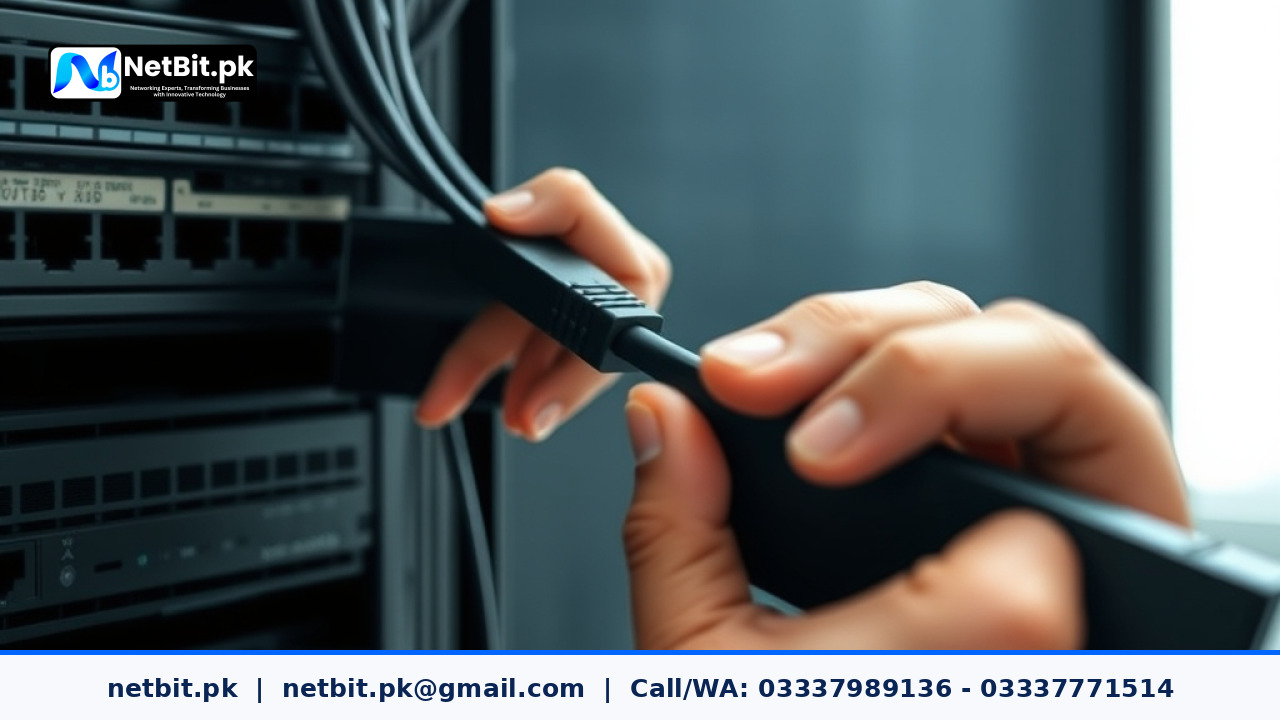
Physical communication is the foundation of any multi-site tech project. Primary offices rely on structured Cat6 cabling and fiber patch cords terminated into gigabit network switches. For branch offices or warehouses located several kilometers away where wired connections are impractical, point-to-point outdoor wireless devices like PowerBeam and LiteBeam antennas establish stable high-bandwidth links across long distances.
2. Centralized Custom Web Applications
When multiple physical locations share operational data, generic off-the-shelf desktop software often struggles with synchronization. Custom web applications allow staff in distant branches to input sales, log inventory, or record site activities into a central database in real time. Local caching mechanisms ensure that temporary internet slowdowns do not pause daily operations.
3. Integrated CCTV Surveillance Protocols
Commercial facilities require security setups that can be monitored centrally. Modern multi-site projects use IP-based CCTV cameras configured with efficient video sub-streams and scheduled motion triggers. This allows branch security feeds to stream to the central management center without overwhelming local network bandwidth.
Step-by-Step Roadmap for Implementing Complex Tech Projects
Executing a multi-location tech update successfully requires systematic planning. Below is a practical four-step implementation blueprint used by technical teams across Pakistan.
- Comprehensive Infrastructure Audit: Conduct on-site evaluations at each branch facility. Assess existing cabling quality, patch panel configurations, power stability, and server room climate conditions.
- Network Backbone & Hardware Deployment: Lay Cat6 cabling inside protective conduits, terminate patch panels cleanly, and configure managed switches. Align outdoor LiteBeam or PowerBeam antennas for line-of-sight wireless transmission between distant facilities.
- Custom Software & Database Synchronization: Deploy custom web applications and desktop client software. Configure secure API connections and role-based access rules so branch staff access only the features relevant to their roles.
- Surveillance & Central Monitoring Integration: Mount commercial IP CCTV cameras, calculate hard drive storage needs for local recording retention, and configure encrypted sub-stream access for central office viewing.
Best Practices for Project Longevity and Reliability
Building a multi-site system is only half the battle; maintaining its reliability requires disciplined operational habits. Organizations should implement these essential maintenance procedures:
- Routine Hardware Cable Maintenance: Inspect outdoor fiber patch cords and Cat6 runs every month to prevent weather-related wear or loose connector pins.
- Automated Database Backups: Schedule daily encrypted backups of all central and local database instances to guard against hardware corruption.
- Structured Network Port Labeling: Ensure every switch port, patch panel outlet, and wireless bridge device is clearly documented and labeled for fast troubleshooting.
- Regular User Permission Audits: Review employee software access levels quarterly to restrict system settings as staff roles change.
Frequently Asked Questions (FAQs)
Can custom software operate reliably across distant branches with limited internet bandwidth?
Yes. Custom web applications designed with background data queuing and optimized database queries can handle low-bandwidth environments smoothly. By sending lightweight data payloads instead of heavy page reloads, distant facilities remain synchronized without operational lag.
Why should wireless bridges like LiteBeam or PowerBeam be used instead of standard broadband lines?
Outdoor point-to-point wireless bridges establish direct, private local network connections between buildings without monthly service fees from third-party internet service providers. They provide high-throughput local data transfers for CCTV streams and internal file sharing across distances up to 10 kilometers or more.
How does structured Cat6 cabling improve overall business system performance?
Unstructured or loosely run network cables cause packet loss, cross-talk interference, and unexplained connection drops. High-quality Cat6 cabling terminated into clean patch panels ensures stable gigabit speeds across all connected workstations, servers, and IP cameras.
Transform Your Complex Tech Projects with NetBit Tech Expertise
Managing specialized technology projects requires a partner who understands both hardware cabling and modern software engineering. Whether you need to connect distant warehouse facilities, build a custom business management portal, or set up a high-performance commercial CCTV network, NetBit Software House delivers comprehensive, turn-key solutions tailored to regional requirements.
Based in Khuzdar, Pakistan, NetBit Tech specializes in end-to-end technology projects. Our team handles everything from Cat6 and fiber optic networking, LiteBeam wireless bridging, and IP camera installations to modern web application development, desktop software, and proactive IT support. We eliminate the stress of dealing with multiple contractors by managing your entire technology stack under one roof.
Ready to modernize your business operations with a tailored IT and software deployment? Visit netbit.pk or contact the technical specialists at netbit software house today to schedule a complete infrastructure evaluation and project consultation.



Reader comments.
Share your question, suggestion or experience related to this article.
No comments yet
There are no approved comments on this article yet. You can be the first person to leave one.