

Understanding Fiber Optic Backbones in Modern IT Infrastructure
For many businesses in Pakistan, the transition from simple local area networks to high-speed corporate environments requires more than just standard Cat6 cabling. As offices grow across multiple floors or large warehouses, the limitations of copper wiring—specifically distance and electrical interference—become apparent. This is where a fiber optic backbone becomes essential. At netbit, we specialize in helping businesses in Khuzdar and across Pakistan transition to these high-capacity systems.
A fiber optic backbone acts as the primary highway for your data. It connects different network segments, such as server rooms to departmental switches, ensuring that high-bandwidth activities like video conferencing, large file transfers, and cloud-based software applications run without bottlenecks. Unlike traditional copper cables, fiber uses light to transmit data, making it immune to the electromagnetic interference often caused by power generators and heavy machinery common in Pakistani industrial zones.
Key Components of a Fiber Optic Infrastructure
Before beginning an installation, it is crucial to understand the physical components involved in a professional fiber setup. Netbit tech emphasizes the use of quality hardware to ensure long-term stability.
- Fiber Optic Cabling: Usually Single-mode (for very long distances) or Multi-mode (ideal for within-building backbones).
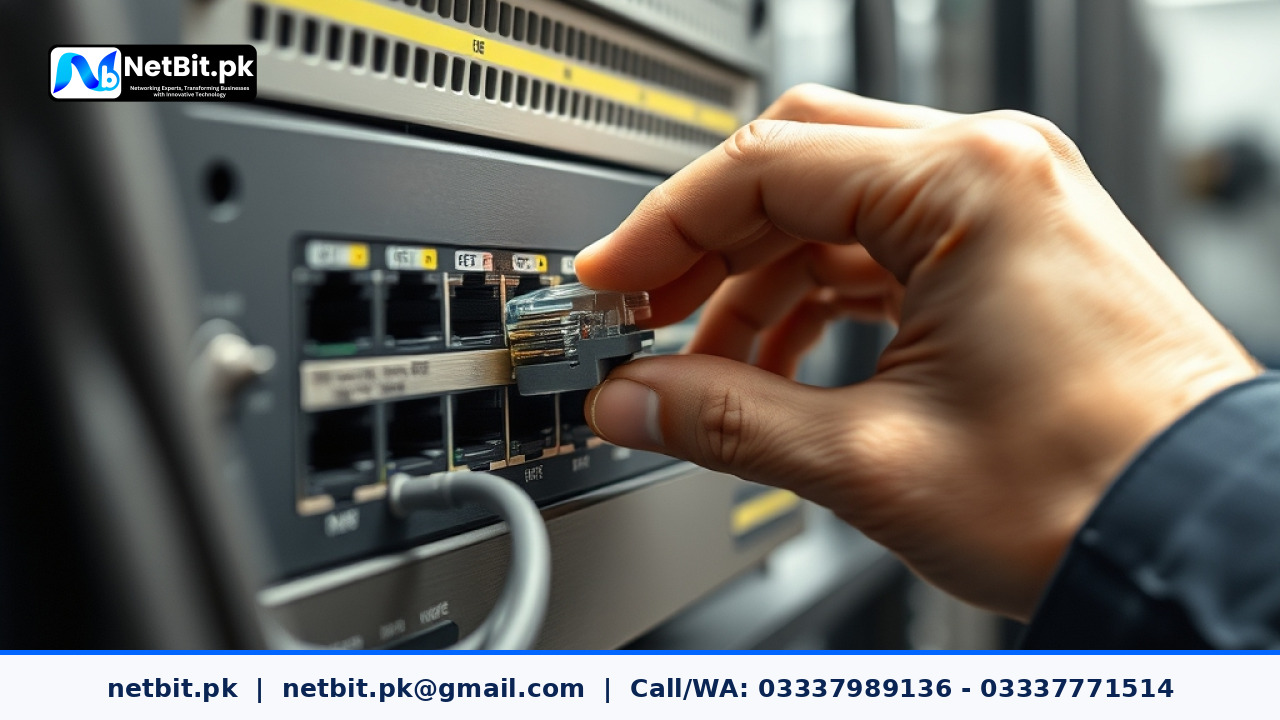
- SFP Transceivers: Small Form-factor Pluggable modules that plug into your network switches to convert electrical signals into light signals.
- Fiber Patch Cords: Short cables used to connect the fiber patch panel to the network switch. These often come with LC, SC, or ST connectors.
- Optical Distribution Frames (ODF): These units house and protect the fiber splices and terminations, keeping the delicate glass strands safe from physical damage.
Choosing Between Single-mode and Multi-mode Fiber
For most office environments in Pakistan, Multi-mode fiber (such as OM3 or OM4) is the standard choice. It is cost-effective for distances up to 300-500 meters and supports speeds of 10Gbps and beyond. However, if your business operates across a large campus or requires connections between distant buildings in a city like Khuzdar, Single-mode fiber is necessary to maintain signal integrity over several kilometers.
Step-by-Step Planning for Fiber Installation
Successful IT infrastructure deployment requires meticulous planning. Netbit software house follows a structured approach to ensure that every installation meets international standards while considering local environmental factors.
1. Assessing Bandwidth Requirements
Start by identifying how many users will be on the network and what kind of data they handle. If your team uses custom software for heavy database management or high-definition CCTV surveillance, your backbone must be capable of handling peak loads without latency. We recommend planning for at least 10Gbps capacity to future-proof your office.
2. Mapping the Physical Path
In many Pakistani buildings, older architecture can make cable routing difficult. You must identify clear paths for conduits. Avoid running fiber near sharp corners or areas where it might be crushed. Fiber optic glass is durable but has a 'bend radius'—if you bend it too sharply, the light signal will leak, or the glass will fracture.
3. Environmental Protection (Dust and Heat)
In regions like Khuzdar, dust is a major enemy of optical components. Even a tiny speck of dust on a fiber connector can block the light signal entirely. Ensure that all fiber terminations are housed in sealed cabinets and that unused ports are always covered with dust caps. Netbit technicians always use specialized cleaning kits before plugging in any patch cord.
Installation Best Practices for Pakistani Businesses
When installing your backbone, following these technical guidelines will prevent 90% of common network failures:
- Use Dedicated Conduits: Never pull fiber optic cables through the same pipes as high-voltage electrical wires. While fiber is immune to electrical noise, the physical heat and risk of accidental damage during electrical repairs are high.
- Label Everything: Proper labeling of fiber patch cords and ODF ports is mandatory. In a crisis, knowing exactly which cable connects to which floor can save hours of downtime.
- Test with an OTDR: After installation, use an Optical Time-Domain Reflectometer (OTDR) to verify the health of the fiber. This tool identifies any breaks or high-loss points along the cable.
- Redundancy: If your budget allows, always pull 'dark fiber' (extra unused strands). It is much cheaper to install extra cables now than to dig up walls and ceilings again in two years.
Maintaining Your IT Infrastructure
IT infrastructure is not a "set it and forget it" investment. Regular maintenance is required to ensure the longevity of your networking gear. This includes checking the temperature of server rooms, as SFP modules can generate significant heat when operating at high speeds. Ensure your switches are installed in ventilated racks with adequate airflow.
Furthermore, regular inspections of patch cords are necessary. In many offices, staff might accidentally kick or pull cables located under desks or in accessible areas. Using netbit khuzdar professional maintenance services ensures that these small physical issues are caught before they cause a total network blackout.
Frequently Asked Questions
Can I connect fiber directly to my computer?
While possible with specialized Network Interface Cards (NICs), it is uncommon. Usually, fiber connects switches together, and then Cat6 copper cables connect the switches to individual computers or laptops.
Is fiber optic more expensive than Cat6?
The initial cost of fiber cable and SFP modules is higher than copper. However, fiber lasts longer, supports much higher speeds, and covers longer distances, making it more cost-effective for business backbones in the long run.
Does NetBit handle fiber splicing?
Yes, netbit tech provides professional fiber splicing, termination, and testing services as part of our comprehensive networking and IT infrastructure packages.
Why Partner with NetBit for Your IT Infrastructure?
Building a reliable network requires more than just buying cables; it requires a deep understanding of hardware, software, and local environmental challenges. NetBit Software House & Technology is the leading provider of high-end IT solutions in Khuzdar and the surrounding regions. Our team of experts specializes in designing custom networking architectures that grow with your business.
From installing high-performance switches and fiber optic backbones to deploying custom software and CCTV surveillance systems, netbit provides a one-stop solution for all your technology needs. We understand the Pakistani business landscape and provide hardware and software integrations that are robust, secure, and easy to manage. Don't let outdated cabling slow down your operations. Contact netbit.pk today to consult with our engineers and take your office infrastructure to the next level.


Reader comments.
Share your question, suggestion or experience related to this article.
No comments yet
There are no approved comments on this article yet. You can be the first person to leave one.