
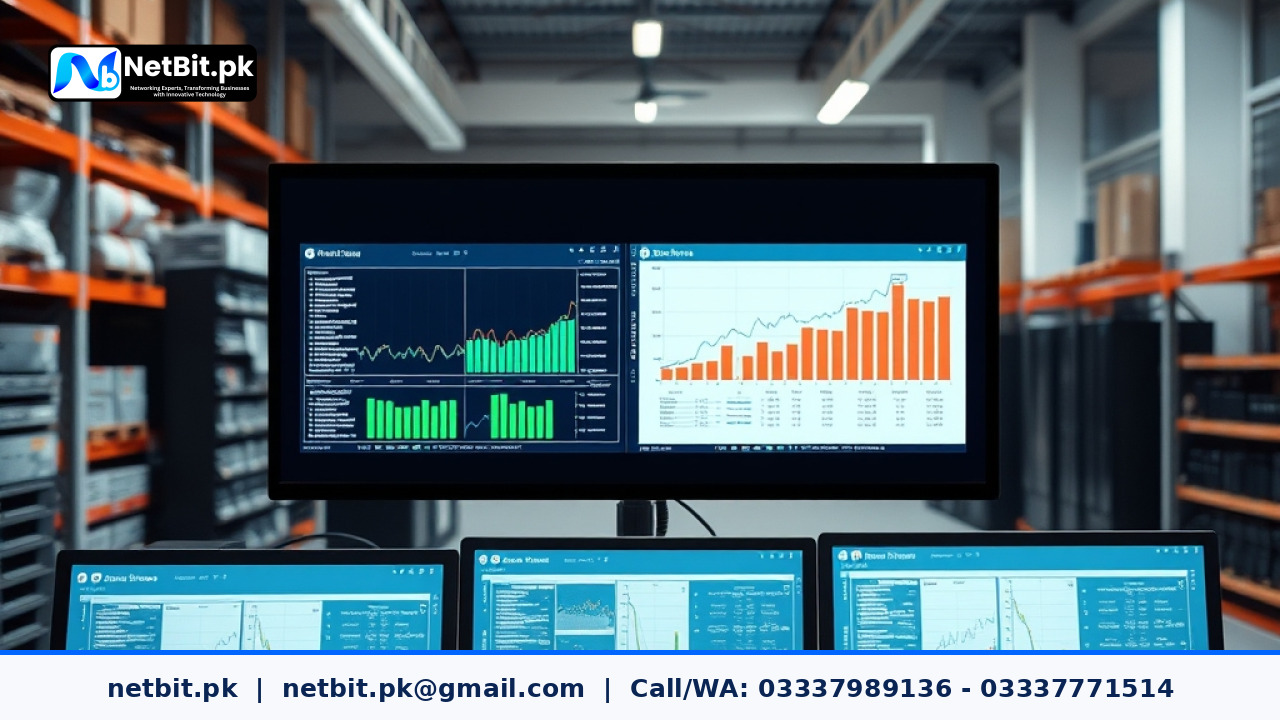
The Growing Need for Modern Warehouse Efficiency
Managing inventory manually in growing regional businesses often leads to stock discrepancies, delayed order fulfillment, and unnecessary administrative overhead. Recently, industry observers have noted a significant shift among local enterprises toward adopting automated inventory solutions. Instead of relying on traditional barcode scanning or paper ledgers, warehouse operators are turning toward custom RFID tracking systems tailored to their specific operational workflows.
At NetBit tech and software house, we observe that small and medium enterprises want practical methods to monitor goods in real time. Custom RFID asset tracking allows teams to scan multiple items simultaneously without direct line-of-sight, which drastically cuts down the time required for routine stock audits.
How Custom RFID Tracking Works in Daily Operations
An RFID system consists of small electronic tags attached to inventory items, specialized readers that emit radio waves, and a backend software dashboard to process the incoming data. When items move through loading docks or storage zones, the readers automatically log their location and movement history.
For businesses looking to integrate these custom solutions, the implementation process usually involves several key steps:
- Mapping out physical storage zones and choke points in the warehouse.
- Selecting appropriate high-frequency or ultra-high-frequency tags based on material types.
- Configuring local database servers to record real-time inventory updates without latency.
- Training floor staff on how to troubleshoot minor reader connectivity issues.
By keeping the underlying architecture straightforward, companies avoid the common pitfalls of overly complex enterprise software that demands continuous external support.
Evaluating Connection Stability During Setup
Reliable data transmission is critical when deploying wireless sensor networks and active tracking terminals across a large facility. If network performance drops, inventory updates can become delayed, leading to synchronization errors between the warehouse floor and the central office database. Before rolling out new hardware nodes, network administrators often run an internet speed test to verify that local wireless access points and gateway routers maintain stable throughput. Ensuring adequate bandwidth helps prevent packet loss during peak operational hours when hundreds of tag reads are processed concurrently.
Future Outlook for Regional Technology Adoption
As competition increases across domestic markets, investing in practical, scalable automation tools helps businesses remain resilient. Whether developing specialized micro-controller hardware or integrating local database solutions, modern organizations benefit from keeping their technology stack clean and maintainable. If your business is ready to transition toward more efficient operational workflows, NetBit tech and software house is here to help you build reliable, customized systems that fit your exact needs. Contact us today to discuss how our team can support your next technology project.



Reader comments.
Share your question, suggestion or experience related to this article.
No comments yet
There are no approved comments on this article yet. You can be the first person to leave one.